

University Master's Degree in Business Intelligence Based on Data Analytics
Déjanos tu datos y te contactaremos
1 year
Spring 2027
Presencial
60
Spanish
30 places · On-campus
Programme Objectives
The Master’s in Business Intelligence and Data Analytics aims to provide advanced training in the data lifecycle and its application to business, preparing students to transform data into strategic decisions in digital, global and constantly evolving environments.
Data Lifecycle and Analytics Architectures
Understand how data is stored, structured and managed to ensure quality, performance and scalability.
Data Visualisation and Decision-Making
Communicate insights through data storytelling and support data-driven strategic decision-making.
Advanced Statistics and Machine Learning
Apply analytical methods and predictive models to solve real-world business problems using empirical evidence.
Data Governance and Digital Ethics
Manage data quality, security and privacy, applying the principles of responsible AI and regulatory compliance.
Programming and Data Management
Master tools such as Python, SQL and ETL/ELT pipelines to build robust analytics solutions.
Business Applications and Analytics Projects
Integrate analytics across different sectors by developing real-world projects using agile methodologies and a value-driven approach.
Teaching Methodology and Student Support
Lectures, case study analysis and data project development, applying analytics, machine learning and business intelligence techniques in real-world environments.
Development of technical skills in data analysis, programming and visualisation, alongside decision-making, communicating findings and working effectively in multidisciplinary teams.
Ongoing assessment of learning progress through practical and theoretical examinations, applied projects and the Master's Dissertation.
Academic tutorials, professional mentoring and personalised support throughout the entire programme.
Virtual campus, advanced digital environments, up-to-date bibliographic resources and professional simulation tools.
Integrating technological innovation with ethical awareness and social commitment, in line with UNINDE’s core values.
ACADEMIC STRUCTURE
Study Plan
The University Master’s Degree in Business Intelligence Based on Data Analytics is designed to provide comprehensive training that combines data analysis, technology and business applications. Throughout the programme, students will acquire theoretical knowledge and practical skills in statistics, programming, machine learning and business intelligence, preparing them to transform data into strategic decisions in digital business environments.
First Semester
Students acquire the foundations of data analysis, beginning with Data Analysis Fundamentals and Advanced Statistical Analysis. They also develop technical skills in Programming for Data Analysis and Data Management and Storage, gaining experience with key tools for processing information. The semester concludes with Machine Learning Techniques, introducing predictive models and their application in real-world environments.
Second Semester
The focus shifts to applying data to business decision-making. Students work on Data Preparation and Predictive Models and Applications of Data Analysis in Business Management, integrating analytics into real-world contexts. They explore Data-Driven Business Decisions and Strategic Data Management in greater depth, while also developing their skills in Data Visualisation. The programme concludes with External Academic Placements and the Master’s Dissertation, where students apply the knowledge they have acquired to real-world projects.
Professional Placements
Students will undertake placements with companies, allowing them to apply the knowledge they have acquired to real-world projects and enhance their skills in Business Intelligence and Data Analytics.
Master’s Dissertation
The Master’s Dissertation is an integrative project that allows students to apply the knowledge and skills acquired throughout the programme. Students will tackle real-world problems they may encounter in their day-to-day professional lives.
PROFESSIONAL CAREER
Career Opportunities and Employability
Graduates of UNINDE’s Master’s in Business Intelligence and Data Analytics are equipped to take on key roles in data analysis, business intelligence and strategic decision-making, both in companies and public-sector organisations. The main career opportunities are outlined below:
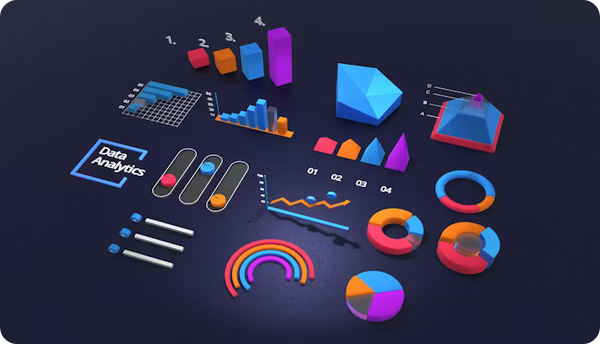
Turning data into actionable insights, developing performance indicators and supporting decision-making in business environments.

Designing predictive models and managing data architectures to ensure data quality, availability and performance.
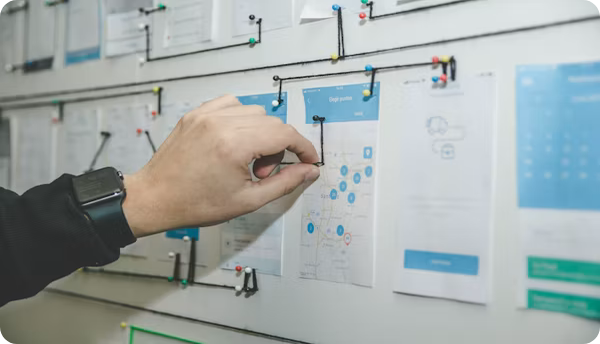
Applying analytics to optimise decision-making in areas such as operations, marketing, logistics and finance.

Identifying data-driven business opportunities, developing analytics solutions and bridging the gap between business needs and technology.

Ensuring data quality, security and regulatory compliance, including GDPR requirements and AI ethics.
PROFESSIONAL CAREER
Work Placements in Companies
Professional placements are a fundamental part of UNINDE’s Master’s in Business Intelligence and Data Analytics, enabling students to gain hands-on experience in data and analytics. Through partnerships with technology companies, consultancies and organisations across a range of sectors, students apply their knowledge of data analysis, business intelligence, machine learning and decision-making, developing their skills in real-world environments and tackling professional challenges in digital contexts.
Admissions
Admissions Process
Complete your enrolment quickly and easily. Follow these steps to secure your place and begin your studies, with everything you need to access the resources and tools from day one.
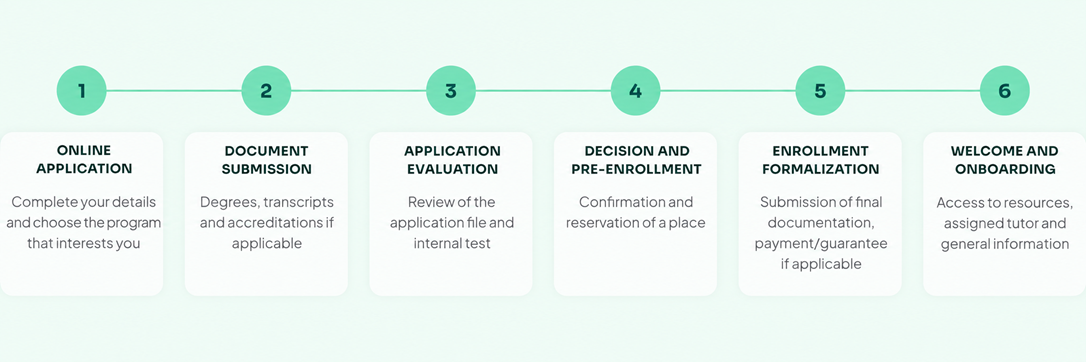
Entry Requirements and Required Documentation
To gain admission to the Master’s programme, students must meet the requirements established by current regulations and submit the necessary documentation. The entry requirements for each admission route are outlined below:
Valid Academic Entry Qualification
An official university degree, such as a Bachelor’s Degree, Licenciatura or equivalent qualification, in a related field such as Data Science, Engineering, Economics, Business Administration, Marketing or other disciplines associated with data analysis and business management.
Official Academic Transcript
A full academic transcript detailing the subjects studied, the grades obtained and successful completion of previous studies.
Proof of Identity
A valid national identity card (DNI) or passport and, where applicable, an official recognition decision or certified translation of foreign qualifications.
Proof of Language Proficiency
A recognised certificate demonstrating the required level of language proficiency, if specified as an entry requirement for the programme.
Additional Documentation
Additional requirements arising from agreements, placements, mobility programmes or specific academic circumstances.
Regulations and Accreditations
The University Master’s Degree in Business Intelligence and Data Analytics is governed by the current regulations applicable to official university programmes in Spain, ensuring its academic quality, scientific rigour and official recognition at both national and European level.
The organisation, verification and accreditation of official degree programmes are carried out in accordance with the requirements established by Royal Decree 822/2021 of 28 September, which regulates the organisation of official university programmes and quality assurance within the Spanish university system.
In addition, the Master’s programme is registered in the Register of Universities, Centres and Degrees (RUCT) of the Ministry of Universities. This confirms that the qualification is official, valid throughout Spain and complies with the standards of the European Higher Education Area (EHEA).
Official Links
Would you like to know more?
Download the Full Study Plan
Access detailed information on modules, competencies, ECTS credits and the structure of UNINDE’s Master’s programme. This study plan will help you understand what you will study at each stage of the programme and how theoretical and practical content is integrated.
Contact the Student Guidance Team
Do you have any questions about admission, enrolment, work placements or career opportunities related to the Master’s programme? Our Student Guidance Team is here to answer your questions, explain the application process and help you prepare your application. Request more information and we will be happy to assist you.
FAQs
We have gathered answers to the most frequently asked questions about UNINDE here, so you can quickly and easily find the information you need.
If you cannot find the answer to your question or need further details, our team will be happy to help. Simply get in touch and we will respond as soon as possible.
Do I need to know how to programme before starting the Master's programme?
Advanced programming knowledge is not essential. The Master’s programme introduces tools such as Python and SQL progressively, enabling students to develop the necessary skills from the outset.
What is the difference between a Data Analyst, a Data Scientist and a Data Engineer?
A Data Analyst focuses on interpreting information and generating insights, a Data Scientist develops advanced predictive models, and a Data Engineer is responsible for data architecture and processing. This Master’s programme prepares you to understand and work across all three roles.
Is this Master's programme more focused on business or technology?
The programme combines both approaches, integrating advanced analytics with business insight to turn data into strategic decisions and deliver real value to organisations.
What tools and technologies will I learn to use during the Master's programme?
You will work with key industry tools and technologies such as Python, SQL, machine learning, data visualisation and business intelligence systems, as well as data management and analysis methodologies used in business environments.
Which sectors can I work in after completing the Master's programme?
You will be able to build your career in sectors with high demand for data professionals, such as finance, healthcare, logistics, energy, retail, e-commerce, public administration and technology consultancy, where the use of data is key to competitiveness.
Will this Master's programme qualify me for roles related to artificial intelligence?
Yes, the programme includes training in machine learning and advanced analytics, opening up opportunities in roles related to the application of artificial intelligence in business.
Can I combine the Master's programme with my job?
Yes, the Master’s programme is designed to be compatible with professional commitments, particularly in its planned online format, which will offer greater flexibility.
What types of projects will I work on during the Master's programme?
You will work on real-world data analysis projects, applying modelling and visualisation techniques and decision-making skills to address genuine business challenges.