

University Master's Degree in Agri-Food Business Management
Déjanos tu datos y te contactaremos
1 year
Spring 2027
Presencial
60
Spanish
30 places · On-campus
Programme Objectives
UNINDE’s Master’s in Agri-Food Business Management provides advanced training in strategic management and innovative technologies applied to the agri-food sector. Throughout the programme, students will develop the skills needed to optimise operations, digitalise businesses and promote sustainability, preparing them to lead projects in a global and competitive environment.
Analyse the Economic and Legal Environment
Analyse the economic and legal environment of the agri-food sector in Spain and the EU, including the Common Agricultural Policy (CAP) and public support policies, to assess their impact on the competitiveness of agri-food businesses.
Examine Operations Design and Management
Examine the design and management of agri-food operations, including quality, food safety and traceability, applying production technologies to improve efficiency and sustainability.
Understand Economic and Financial Indicators
Comprender los indicadores económicos y financieros de explotaciones agroalimentarias, y conocer los instrumentos de financiación e inversión para optimizar la rentabilidad, liquidez y solvencia de las empresas.
Understand the Principles of Agri-Food Marketing
Understand the principles of agri-food marketing, from market segmentation to the implementation of digital marketing strategies, online sales and the analysis of commercial performance metrics at both national and international level.
Understand the Fundamentals of Strategic Management
Understand the fundamentals of strategic management in agri-food businesses, including the relationship between mission, objectives and growth, integration, diversification and internationalisation strategies.
Understand Enabling Digital Technologies
Understand the enabling digital technologies used across the agri-food supply chain (IoT, automation and cloud platforms) and their role in driving the digital transformation of businesses in the sector.
Methodology and Student Support
Theoretical classes, real-world case simulations and placements with companies in the agri-food sector, applying the knowledge acquired in professional environments.
Development of technical skills, business strategy, effective communication, professional ethics and collaborative teamwork within multidisciplinary teams.
Progressive monitoring of learning through practical and theoretical assessments, applied projects and the Master’s Dissertation.
Academic tutorials, professional mentoring and personalised support throughout the entire learning journey.
Virtual campus, advanced digital environments, up-to-date bibliography and professional simulation tools.
Integration of technological innovation with ethical awareness and social commitment, in line with UNINDE’s DNA.
ACADEMIC STRUCTURE
Study Plan
The Study Plan for the Master’s in Agri-Food Business Management is designed to provide comprehensive training, combining business management with technology applied to the agri-food sector. Throughout the programme, students will gain theoretical knowledge, undertake professional placements and acquire hands-on experience in the field, preparing them to manage and lead agri-food businesses in a competitive, technology-driven environment.
First Semester
Students focus on understanding the economic and legal environment of the agri-food sector while developing knowledge of finance and accounting as applied to businesses in the industry. They also explore production technologies, food quality and safety, and operations and supply chain management. Commercial management and marketing in the agri-food sector complete the semester.
Second Semester
Key topics covered include people management, leadership and talent management, as well as digital transformation and new technologies across the agri-food supply chain. Students also learn about business intelligence and data analytics for strategic decision-making. In addition, they focus on strategic management and business planning in agri-food companies. The semester includes external work placements and the development of the Master’s Dissertation, where students apply their learning to real-world projects.
Professional Placements
Throughout the programme, students will undertake external work placements with agri-food companies, industry consultancies or technology organisations, where they will be able to apply the knowledge they have acquired to real-world situations. These placements provide hands-on experience in business management, technological innovation and process optimisation within the agri-food sector, enabling students to develop key skills in team management, digital transformation and commercial strategy.
Master’s Dissertation
The Master’s Dissertation is an integrative project in which students apply the knowledge acquired throughout the programme. Students will develop a real-world project in areas such as technological innovation, supply chain management or agri-food marketing strategies, demonstrating their ability to address complex challenges and propose practical solutions within the agri-food sector.
PROFESSIONAL CAREER
Career Opportunities and Employability
Graduates of UNINDE’s Master’s in Agri-Food Business Management are equipped to work independently or as part of multidisciplinary teams across a wide range of public and private sectors, taking on key roles in management, innovation and technological development within the agri-food industry.
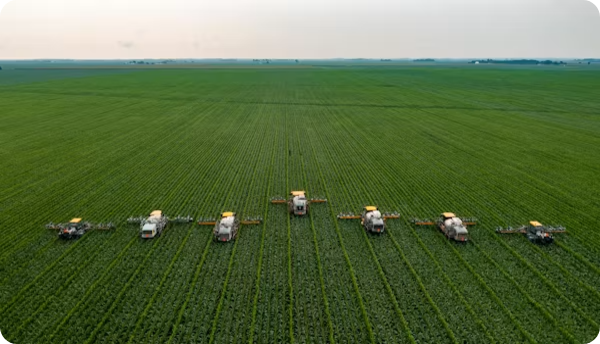
Professional practice in agri-food business management, working in business strategy, production, distribution and marketing of agri-food products.

Advising companies in the sector on process management, supply chain optimisation and technologies applied to agriculture.
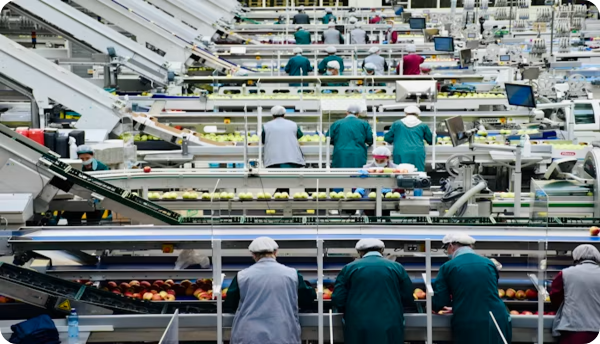
Managing logistics and optimising production processes and the distribution of agri-food products.
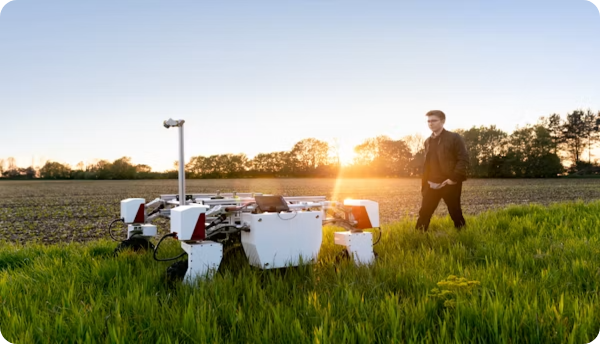
Implementation and management of advanced technologies in the agri-food sector, such as precision agriculture, automation and process digitalisation.

Research into key areas such as sustainability, emerging technologies and new agri-food practices, contributing to the advancement of the sector.

Professional development in agri-food education and training, delivering knowledge and strategies in educational institutions and specialised training centres.

Leading multidisciplinary teams, managing agri-food projects and directing companies in the agri-food sector.
PROFESSIONAL CAREER
Work Placements in Companies
Professional placements are an essential part of UNINDE’s Master’s in Agri-Food Business Management and Technology, giving students the opportunity to gain hands-on experience in the field. Through collaborations with agri-food companies, technology consultancies and organisations across the sector, students put their learning into practice in real-world settings, developing their skills in management, technological innovation and business strategy in a professional environment.
Admissions
Admissions Process
Complete your enrolment quickly and easily. Follow these steps to secure your place and begin your studies on the Master’s in Agri-Food Business Management and Technology, with everything you need to access the resources and tools from day one.
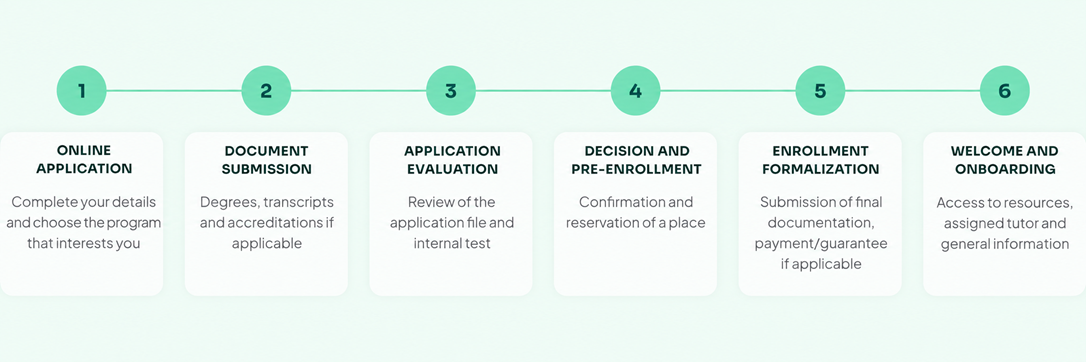
Entry Requirements and Documentation
To gain admission to the Master’s in Agri-Food Business Management and Technology, students must meet the requirements established by current regulations and submit the necessary documentation. The entry requirements for each admission route are outlined below:
Valid Academic Qualifications
An official Bachelor’s degree, Licenciatura or equivalent qualification in a related field, such as Business Studies, Economics, Engineering or Agriculture, among others.
Official Academic Transcript
A full academic transcript detailing the modules completed, grades obtained and successful completion of previous studies.
Identification Document
A valid national identity card or passport and, where applicable, an official recognition decision or certified translation of foreign qualifications.
Proof of Language Proficiency
A recognised certificate demonstrating the required language proficiency, where this is a specific requirement of the programme.
Additional Documentation
Additional requirements arising from agreements, work placements, mobility programmes or other specific academic circumstances.
Regulations and Accreditations
The University Master’s Degree in Agri-Food Business Management is governed by the current regulations applicable to official university programmes in Spain, ensuring its academic quality, scientific rigour and official recognition.
The organisation, verification and accreditation of official study programmes are carried out in accordance with the requirements established by Royal Decree 822/2021, which regulates the organisation of university education and ensures quality throughout the Spanish university system.
In addition, the Master’s programme has been verified and is registered in the Register of Universities, Centres and Degrees (RUCT) of the Ministry of Universities. This ensures that the qualification is valid and recognised throughout Spain and within the European Higher Education Area (EHEA).
Official Links
Would you like to know more?
Download the Full Study Plan
Access detailed information on modules, competencies, ECTS credits and the structure of UNINDE’s Master’s in Agri-Food Business Management and Technology. This study plan will help you understand what you will study at each stage of the programme and how theoretical and practical content is integrated.
Contact the Student Guidance Team
Do you have any questions about entry requirements, enrolment, work placements or career opportunities for the Master’s programme? Our Student Guidance Team is here to answer your questions, explain the application process or help you prepare your application. Request more information and we’ll be happy to assist you.
FAQs
We have brought together the answers to the most frequently asked questions about UNINDE to help you find the information you need quickly and easily.
If you cannot find the answer to your question or need further details, our team will be delighted to help. Simply get in touch and we will get back to you as soon as possible.
Is this Master's programme suitable for someone with no previous experience in the agri-food sector?
Yes, this Master’s programme is designed both for professionals in the agri-food sector who wish to specialise and for individuals with backgrounds in other fields who want to redirect their careers towards the sector. The programme provides comprehensive training, starting with the fundamentals, to ensure that all students acquire the skills needed to take on leadership roles in the agri-food industry.
What type of professional background is best suited to this Master's programme?
This Master’s programme is aimed at professionals interested in leading agri-food businesses, as well as managers, entrepreneurs, technology consultants and sustainability specialists seeking to develop business management skills tailored to the agri-food sector. It is ideal for those looking to expand their knowledge and technological skills to help drive the sector’s transformation.
Is the Master's programme delivered on campus or online?
The Master’s in Agri-Food Business Management and Technology is delivered on campus during the first year of the programme. From the second year onwards, we plan to expand the range of study options to include an online format, while maintaining the same academic quality and up-to-date content.
What support will I receive while working on my Master’s Dissertation?
Throughout your Master’s Dissertation, you will receive personalised guidance from academic tutors and experts in the agri-food sector. They will help you integrate the knowledge acquired during the programme and apply it to a real-world project, with the opportunity to present your work to companies in the sector.
What are the entry requirements for this Master's programme?
Admission to the Master’s in Agri-Food Business Management and Technology requires an undergraduate university degree or equivalent qualification, preferably in Business Studies, Economics, Engineering or Agriculture, although other related qualifications will also be considered. An interest in the agri-food sector and business management is also important.
Does this Master's programme offer networking opportunities with industry professionals?
Yes, the programme encourages networking through events, conferences and collaborative projects with companies in the agri-food sector. In addition, work placements provide opportunities to build direct connections with industry professionals, expanding your professional network and opening up future career opportunities. (universidadeuropea.com)
Can I apply for scholarships or financial aid for this Master's programme?
Yes, UNINDE offers various scholarships and financial aid options to make the Master’s programme more accessible. Scholarships may be awarded based on academic merit or financial need. We recommend checking the details of the available schemes on the university’s official website.